
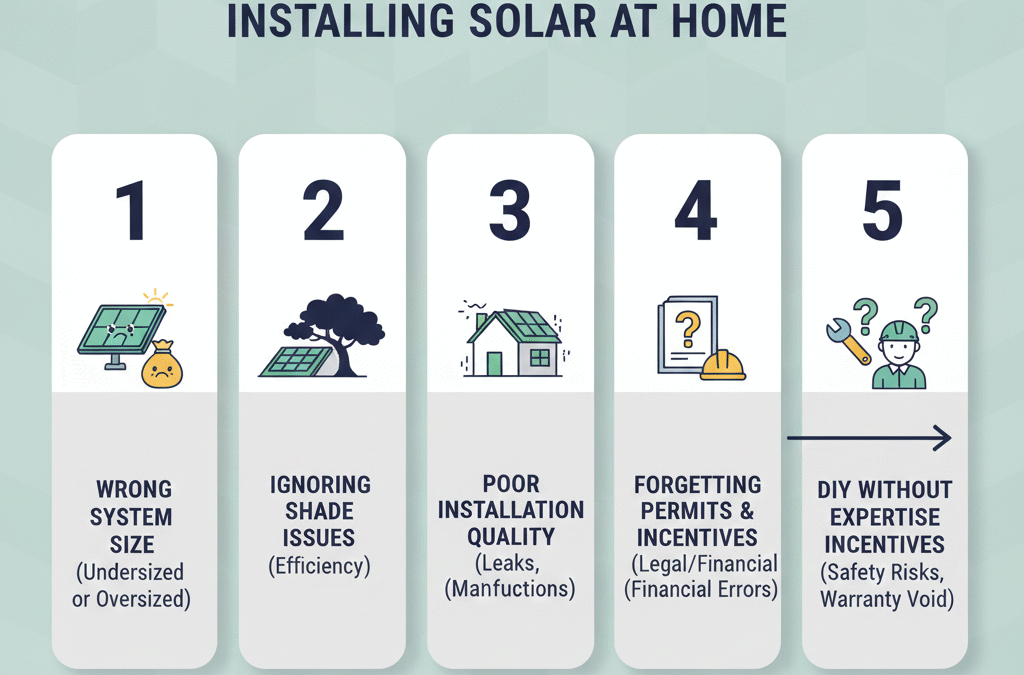
Installing solar panels at home is one of the best decisions for reducing electricity bills and moving toward clean, renewable energy. However, many homeowners make common mistakes during the process that lead to poor performance, higher costs, or long-term issues. Understanding these mistakes can save you time, money, and frustration. Here are the five most common mistakes people make when installing solar at home.
1. Not Evaluating Energy Consumption Properly
One major mistake homeowners make is not understanding their actual electricity usage before installing solar panels. Solar systems should be sized based on your monthly and annual consumption patterns. Many people either underestimate or overestimate their energy needs, resulting in a system that is too small or unnecessarily oversized. A proper energy audit helps determine the correct system size and maximizes your savings.
2. Choosing the Cheapest Panels Instead of the Best Value
Many people opt for the lowest-priced solar panels without checking their quality, efficiency, durability, or warranty. Cheap panels may save money initially but often degrade faster, generate less power, and fail sooner. A solar installation is a long-term investment, and choosing high-quality panels with strong warranties ensures better performance over 20 to 25 years. Always compare efficiency ratings, build quality, and service support before buying.
3. Ignoring Roof Condition and Orientation
Your roof plays a crucial role in the performance of your solar system. A common mistake is installing solar panels without checking the roof’s age, strength, or direction. If the roof needs repairs or replacement, doing solar installation first can lead to double the cost later. Additionally, roofs facing south (in India) usually get the best sunlight. Poor orientation or shading from trees and buildings can significantly reduce solar output.
4. Not Considering Future Electricity Needs
Many homeowners size their solar system only for present consumption and forget that their electricity needs may grow. Adding new appliances, buying an electric vehicle, or expanding your home can increase energy usage. If the solar system cannot support future demands, you may end up drawing more power from the grid. Planning ahead ensures your solar investment stays effective for years to come.
5. Skipping Government Policies, Subsidies, and Net Metering
A big mistake is not taking advantage of government subsidies, state policies, or net metering benefits. Many people do not know they can reduce installation costs through subsidies or earn credits for exporting excess power to the grid. Missing these opportunities can reduce overall savings. Understanding local guidelines, required documents, and application processes helps you get maximum financial benefits from your solar installation.
Conclusion
Installing solar at home is an excellent step toward sustainable living, but avoiding these common mistakes ensures your system performs efficiently and gives maximum returns. Proper planning, choosing quality components, evaluating your roof, understanding policies, and preparing for future needs can help you make the most of your solar investment. When done correctly, solar energy can provide clean, cost-effective power for decades.