
Renewable energy—especially solar power—is transforming the way households and businesses consume electricity. One of the biggest reasons for this rapid adoption is net metering, a billing mechanism that allows solar users to reduce their monthly electricity bills significantly.
What Is Net Metering?
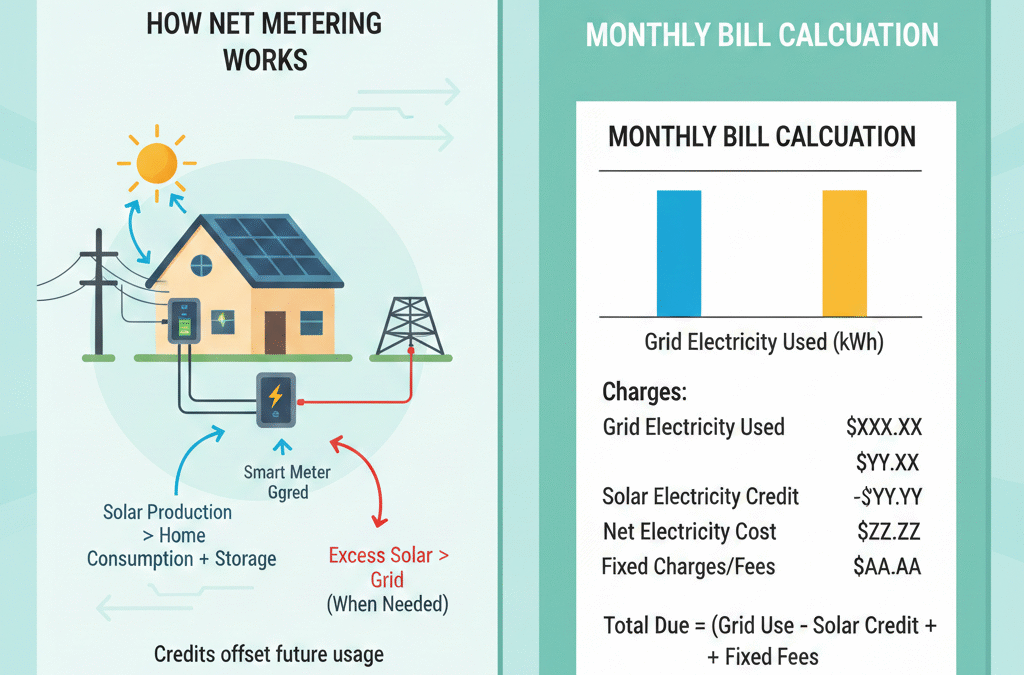
Net metering is a utility billing system that allows solar panel owners to export extra electricity back to the grid. When your solar system generates more power than you use, the surplus is sent to the electricity grid, and you earn credits for it.
Extra solar power → Goes to grid → Earn credits
Less solar power → Pull from grid → Use credits
How Net Metering Works (Step-by-Step)
1. Solar Panels Generate Electricity
2. Home/Business Uses Solar Power First
3. Extra Power Is Exported to the Grid
4. Grid Supplies Power When Solar Is Not Enough
5. Your Meter Tracks Import & Export
6. Monthly Bill Is Calculated Based on Net Units
How Monthly Bills Are Calculated
Simple Example:
Import from grid: 200 units
Export to grid: 150 units
Net Units = 200 – 150 = 50 units
Detailed Example:
Per unit charge = ₹8
Fixed monthly charges = ₹150
Import units = 250
Export units = 180
Net units = 70
Energy charge = 70 × ₹8 = ₹560
Final bill = ₹710
Benefits of Net Metering:
1. Cutting Electricity Costs
2. Efficient Use of Solar Energy
3. Encourages Clean Energy
4. Faster Return on Investment
Conclusion:
Net metering is a smart, efficient, and cost-saving way to use solar power. By balancing the electricity you generate and consume, it ensures maximum savings while promoting clean energy.